
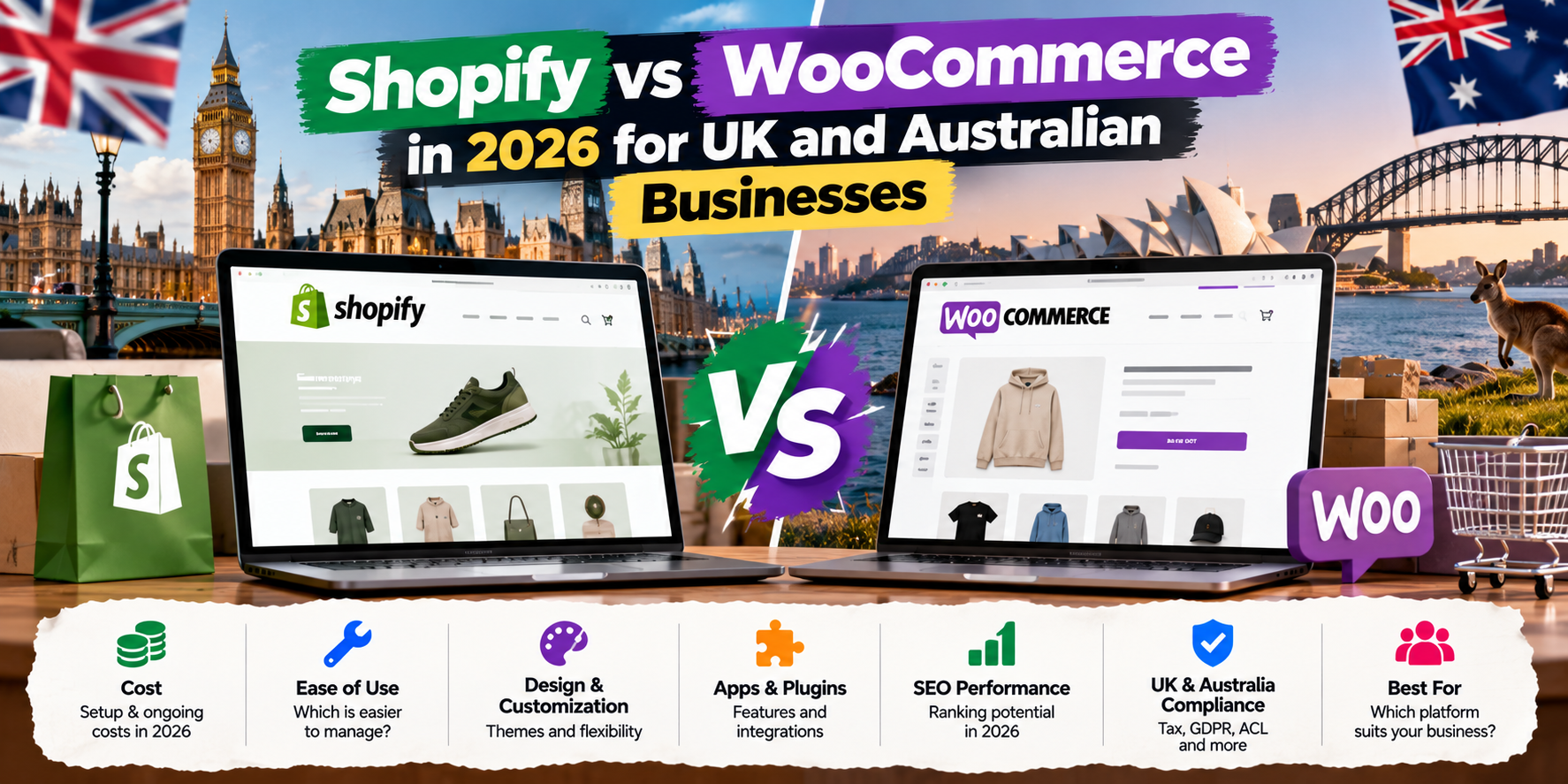
Shopify and WooCommerce are two of the most popular ways to sell online. Both can run successful stores, but they suit different businesses. Here's an honest comparison for UK and Australian sellers, from someone who builds on both.
The Short Version
- Choose Shopify if you want to focus on selling, not managing technology, and you want reliable hosting, security and checkout handled for you.
- Choose WooCommerce if you need deep customisation, already run a content-heavy WordPress site, or want full control over hosting and data.
Cost
Shopify has monthly plan fees (from $39 USD/month on Basic with monthly billing, with local pricing in GBP and AUD), plus apps and payment fees. Hosting, security and updates are included.
WooCommerce is free to install, but you pay for hosting, premium plugins, security and maintenance. A cheap setup can be inexpensive; a well-run, fast store on good hosting costs more than many expect.
Over time, the total cost is often closer than people think. The difference is where the money goes: Shopify fees vs hosting, plugins and maintenance.
Ease of Use
Shopify is easier for most store owners. Adding products, managing orders and running discounts are straightforward. WooCommerce is flexible but requires more technical care: plugin updates, compatibility and backups.
Checkout and Conversion
Shopify's checkout is fast, trusted and includes Shop Pay, which many shoppers already use. WooCommerce checkout can be excellent, but its speed depends heavily on hosting and plugins. See fixing a slow WooCommerce checkout.
Flexibility
WooCommerce wins on raw flexibility: you can change almost anything in the code. Shopify has become much more flexible with Online Store 2.0, metafields, Shopify Functions and custom apps, but some areas, like checkout, are more controlled.
SEO
Both can rank well. WordPress is excellent for content-heavy sites and blogging. Shopify handles technical basics well, though some URL structures are fixed. In practice, content quality and site speed matter more than the platform.
UK and Australia Specifics
- Payments: both support major local options. Shopify Payments is available in the UK and Australia; WooCommerce works with Stripe, PayPal and local gateways.
- Buy now, pay later: Klarna, Clearpay and Afterpay are available on both, with setup varying by region.
- Tax: both can show VAT- or GST-inclusive prices. Shopify Markets makes multi-country selling easier.
- Shipping: both integrate with Royal Mail, Evri, DPD, Australia Post and Sendle, often through apps or plugins.
- Compliance: UK and EU cookie rules, and Australian Consumer Law, apply on either platform. See Australian Consumer Law for online stores.
Which Is Better for You?
- New product brand, small team: usually Shopify.
- Existing WordPress site with lots of content: WooCommerce may fit better.
- Complex B2B or custom product logic: either, but plan carefully.
- Fast growth and international sales: Shopify is often easier to scale.
Frequently Asked Questions
Can I move from WooCommerce to Shopify later?
Yes. Products, customers and orders can be migrated, with redirects to protect SEO.
Which is more secure?
Shopify handles security for you. WooCommerce can be very secure, but it depends on your hosting and maintenance.
Not sure which is right for you? I build on both and will give you an honest recommendation. Shopify, WooCommerce, or get a free quote.
Got a project in mind?
Tell me what you need — I’ll respond within 24 hours with a realistic plan and timeline.