
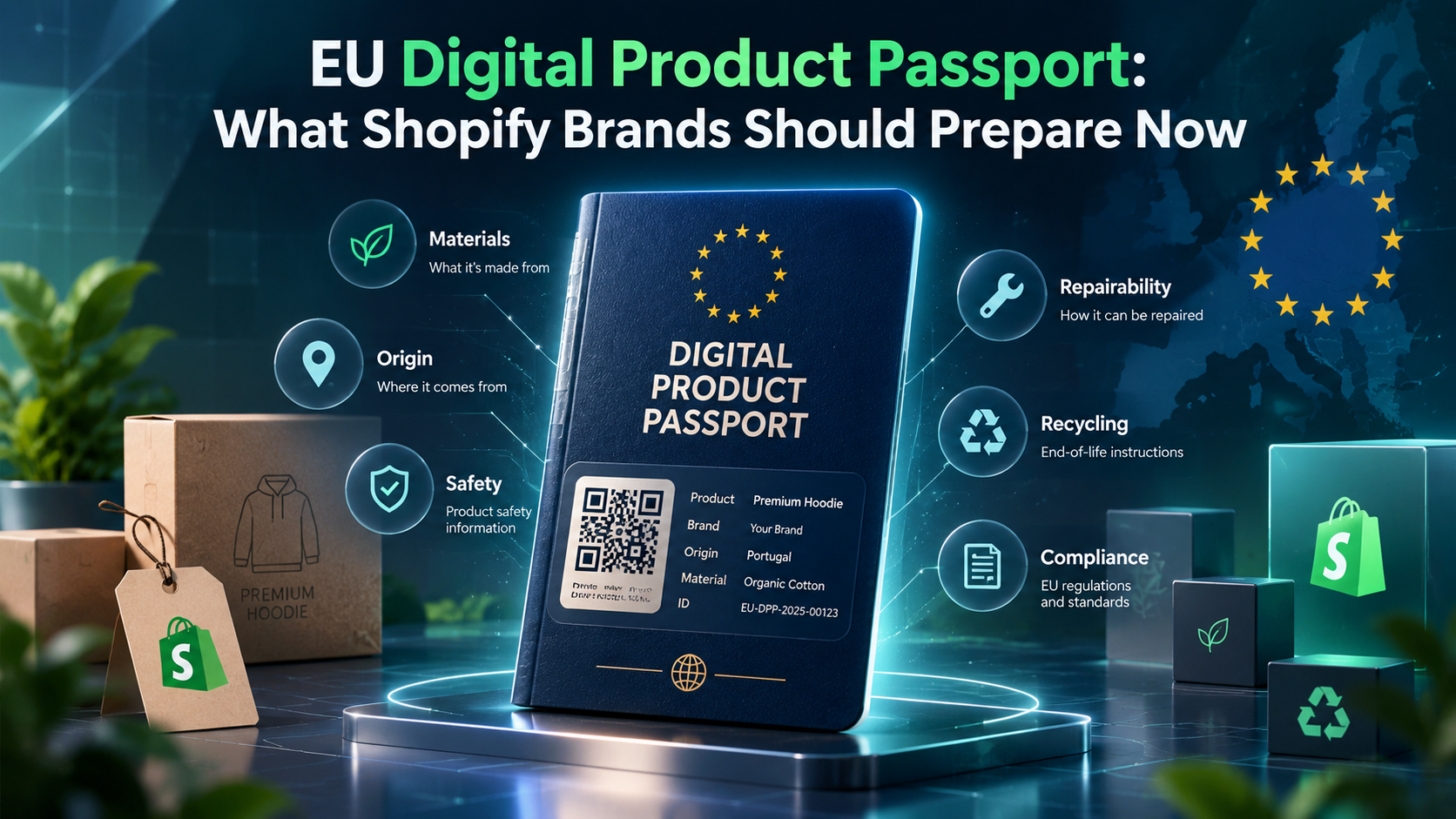
The EU is introducing the Digital Product Passport (DPP): a digital record attached to a product, usually through a QR code, that holds information about what it's made of, how to repair it and how to recycle it. It's part of the Ecodesign for Sustainable Products Regulation (ESPR), which entered into force in July 2024.
It won't hit every product at once. But if you sell textiles, electronics, batteries or furniture to the EU, it's coming, and the brands that organise their product data early will have a much easier time.
What Is a Digital Product Passport?
Think of it as a product's ID card, stored online. Scanning the code on the product or label opens structured information such as:
- Material composition and recycled content.
- Carbon footprint and environmental data.
- Repair, care and disassembly instructions.
- Substances of concern.
- Origin and supply chain information.
- End-of-life and recycling instructions.
The data must be machine-readable, so customs, recyclers and other systems can read it automatically, and customers can read it from their phones.
The Timeline
- July 2024: ESPR entered into force.
- July 2026: The EU's central DPP registry was due to launch.
- 18 February 2027: Battery passports become mandatory for EV batteries, industrial batteries over 2 kWh and light means of transport batteries. This is the first binding date.
- 2027 onward (expected): Rules for textiles, tyres and other priority products are expected to be adopted, typically with around 18 months before they apply.
- 2028 to 2030 (expected): Furniture, mattresses and electronics are expected to follow.
Exact dates for each product group depend on the delegated acts, which are still being written. Textiles and apparel are widely expected to be among the first major consumer categories.
Why This Matters for Your Store
Most Shopify brands store product data in descriptions, spreadsheets and supplier emails. The DPP needs that data to be structured, accurate and linked to each product, often down to the batch or model. That's the hard part, and it takes time to get right.
The good news: the work you do for the DPP also helps with other EU requirements, like GPSR product safety information and new green claims rules. It all depends on having clean product data.
What to Prepare Now
- Map your product data: what do you already know about materials, origin, care and recycling for each product?
- Ask your suppliers for composition, origin and certification data in a structured format.
- Store it as structured data in Shopify: use metafields and metaobjects for materials, certifications, care instructions and suppliers, rather than free-text descriptions.
- Show it on product pages: a clear "Materials and care" or "Product information" section builds trust today, before it's required.
- Plan for QR codes: decide how you'll generate a unique link per product or batch, and where it will live.
- Watch your category: follow announcements for your product group so you know when the clock starts.
Frequently Asked Questions
Do I need a DPP for my products today?
For most consumer products, not yet. Batteries in specific categories are first, from February 2027. Other categories follow as their rules are adopted.
Will Shopify provide DPP features?
Specialist DPP providers are emerging, and they'll likely connect with Shopify. Either way, you'll need your product data organised in Shopify first.
Does it apply to non-EU brands?
Yes, for products placed on the EU market, regardless of where the brand is based.
This article is general information, not legal advice. Timelines for each product category may change.
Want your Shopify product data structured and ready for DPP, GPSR and green claims rules? I set up metafields, metaobjects and product information sections. Get a free quote.
Need a Shopify store built or improved?
Tell me what you need — I’ll respond within 24 hours with a realistic plan and quote.