
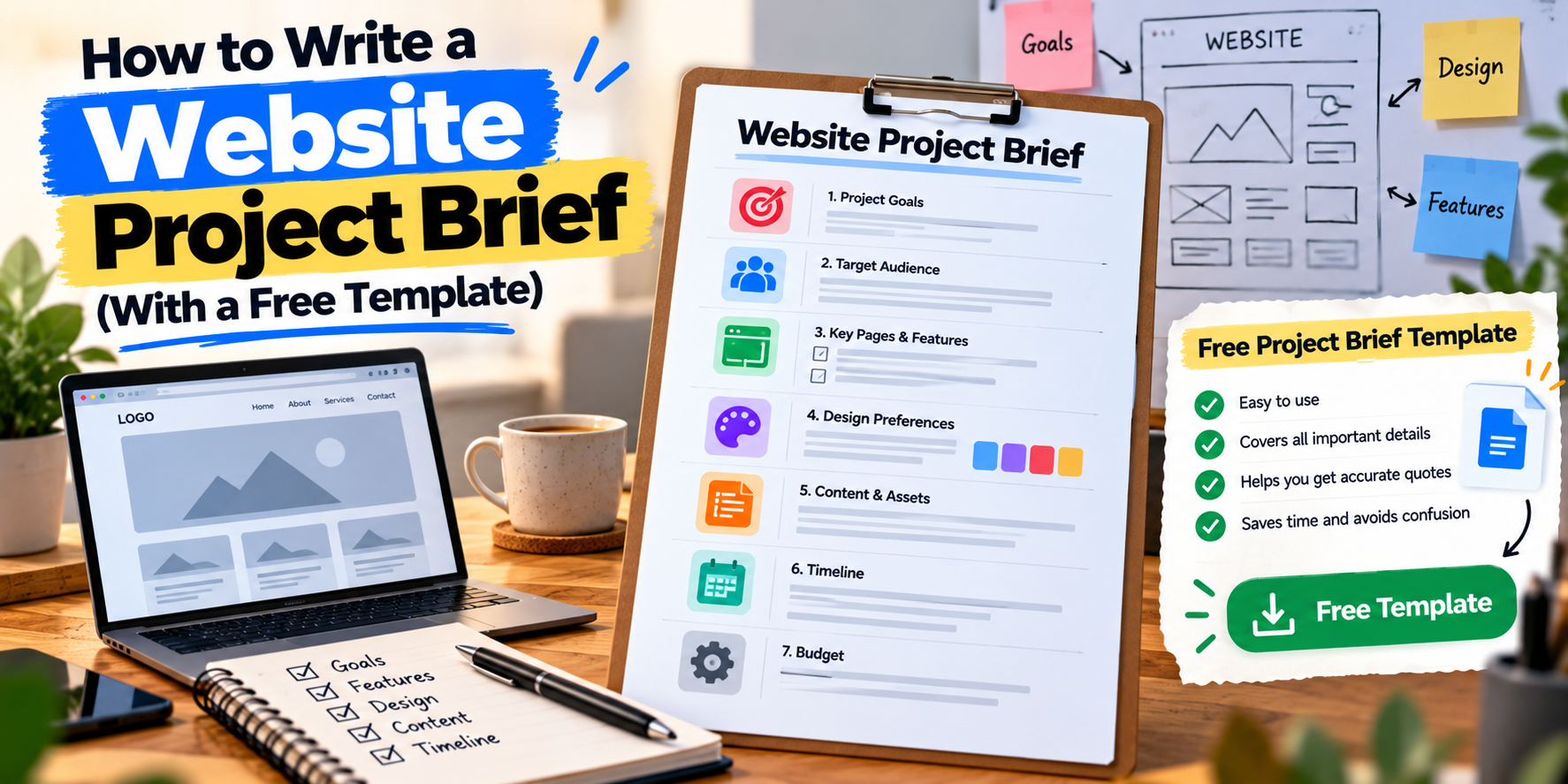
The quality of the quotes you receive depends on the quality of the brief you send. "I need a website, how much?" gets you vague estimates. A clear brief gets accurate quotes, realistic timelines, and a much better final result.
You don't need to be technical to write one. Here's what to include.
1. About Your Business
- What you do, in two or three sentences.
- Who your customers are.
- Where you operate (country, region, online only).
2. The Goal of the Project
This is the most important section. What should the website achieve? Examples:
- "Get more quote requests from local customers."
- "Sell our products online to the UK and EU."
- "Replace our slow, outdated site so it works on mobile."
- "Let customers book appointments without calling us."
Include how you'll measure success, such as more enquiries, more sales or fewer support emails.
3. What You Have Now
- Current website URL and platform (WordPress, Shopify, Wix, etc.).
- What works and what doesn't.
- Existing content, logo, brand colours and photos.
4. Pages and Features
List the pages you expect (Home, About, Services, Contact, Blog) and the features you need:
- Contact forms, quote forms or bookings.
- Online shop, payments, shipping.
- Customer accounts or member areas.
- Integrations: CRM, email marketing, accounting, inventory.
- Multiple languages or currencies.
Mark each as must-have or nice-to-have. It helps developers suggest a phased approach.
5. Design Preferences
- Two or three websites you like, and why.
- Anything you dislike.
- Whether you need a logo or brand design.
6. Content
Who will write the text and provide photos? Content is one of the most common reasons projects get delayed.
7. Budget and Timeline
Sharing a budget range isn't giving away bargaining power. It helps developers suggest the best solution for what you can spend. Include any fixed deadlines, like a product launch or trade show.
8. After Launch
Do you want training, ongoing maintenance, SEO or marketing help?
A Simple Template to Copy
- Business: what we do, who our customers are, where.
- Goal: what the website must achieve, and how we'll measure it.
- Current site: URL, platform, what's wrong with it.
- Pages: list.
- Features: must-have / nice-to-have.
- Integrations: tools we use.
- Design: sites we like, brand assets available.
- Content: who provides text and images.
- Budget: range.
- Timeline: ideal launch date, any hard deadlines.
- After launch: training, maintenance, SEO.
Frequently Asked Questions
How long should a brief be?
One or two pages is plenty. Clarity matters more than length.
What if I don't know what features I need?
Describe the problem you want to solve. A good developer will suggest the right features.
Have a brief ready, or just an idea? Send it over and I'll reply within 24 hours with a plan and timeline. Start a project.
Got a project in mind?
Tell me what you need — I’ll respond within 24 hours with a realistic plan and timeline.